Preparing Your Alberta Home for Winter (and Protecting Your Investment)
There is something magical about the first snowfall in Alberta. The neighbourhood looks beautiful, the mountains get their fresh coat of white, and suddenly, everyone is craving hot chocolate and cozy evenings at home.
But while winter might be great for snow days and holiday traditions, it can be a little less magical for your house.
Freezing temperatures, heavy snowfall, icy sidewalks, and the occasional chinook can put your home through quite the workout. And if your property isn’t prepared, winter can bring more than just a chilly morning. It can lead to frozen pipes, roof damage, higher energy bills, and repairs that could have been avoided.
Whether you are a first-time homeowner, have lived in your property for years, or recently purchased a home in Calgary or Southern Alberta, a little preparation can go a long way.
Here are some practical ways to get your home winter-ready while protecting one of your biggest investments.
1. Give Your Roof and Gutters Some Attention
Your roof is one of the most important parts of your home, and Alberta winters can be particularly hard on it.
Heavy snowfall, fluctuating temperatures, and repeated freeze-thaw cycles can contribute to roof damage, leaks, and ice buildup. The last thing you want is to discover a problem when there is already a foot of snow on your roof.
Before winter arrives, consider:
- Checking your roof for missing, cracked, or damaged shingles.
- Inspecting flashing around chimneys, vents, and other roof openings.
- Cleaning out gutters and downspouts so water can drain properly.
- Making sure downspouts direct water away from your foundation.
- Looking for signs of previous leaks or water damage in your attic.
Clogged gutters can contribute to water backing up near the roofline, while poor drainage can allow water to collect near your foundation. Both can become bigger problems when temperatures drop.
Investment tip: If your roof is getting older, consider having it inspected before winter. Addressing a small issue now may help prevent a much more expensive repair later.
2. Protect Your Pipes From Freezing
Frozen pipes are one of those homeowner nightmares that can go from inconvenient to expensive in a hurry.
When water freezes inside a pipe, it expands. This can put pressure on the pipe and potentially cause it to crack or burst. When the ice thaws, the resulting leak can damage walls, floors, ceilings, and belongings.
Fortunately, there are some simple steps you can take to reduce the risk.
- Insulate exposed pipes in garages, crawl spaces, and other cold areas.
- Seal drafts around pipes that enter your home through exterior walls.
- Keep your home heated consistently during cold weather.
- Open cabinet doors under sinks when temperatures are extremely low, especially if plumbing is located against an exterior wall.
- Know where your main water shut-off valve is located.
- Disconnect and drain outdoor hoses before winter.
If you are leaving your home for an extended period, make sure your heating system is set appropriately and arrange for someone to check on the property.
Important: If a pipe freezes, avoid using an open flame to thaw it. If you suspect a frozen or burst pipe, contact a qualified plumber.
3. Check Your Furnace Before You Need It
Alberta winters are not the time to discover that your furnace has decided to retire.
Your heating system works hard during the colder months, and regular maintenance can help it operate more efficiently and reliably.
Before winter sets in:
- Replace or clean your furnace filter according to the manufacturer’s recommendations.
- Book a professional furnace inspection or maintenance service.
- Check that your thermostat is working properly.
- Make sure vents and air returns are not blocked by furniture or other items.
- Check that smoke and carbon monoxide alarms are working.
A clean filter can help improve airflow and reduce unnecessary strain on your system. Routine maintenance may also help identify issues before they become emergency repairs.
And if your furnace is older, it may be worth considering its remaining lifespan and potential replacement costs as part of your long-term home maintenance budget.
4. Seal Drafts and Improve Energy Efficiency
If your home feels like it has a secret relationship with the outdoors, it might be time to look for drafts.
Cold air entering your home can make rooms uncomfortable and contribute to higher heating costs. Over time, small air leaks can add up.
Take a walk around your home and check:
- Windows and exterior doors.
- Weatherstripping around door frames.
- Cracks or gaps around exterior penetrations.
- Areas where plumbing or wiring enters the home.
- Attic insulation and ventilation.
Simple improvements such as weatherstripping, caulking, and sealing gaps can make a noticeable difference in comfort.
If your home has older windows, consider whether adding insulated curtains or addressing damaged seals could help. Larger upgrades, such as replacing windows or improving attic insulation, may require a more substantial investment.
Homeowner tip: Before spending money on major upgrades, identify where your home is actually losing heat. A professional energy assessment may help you prioritize improvements.
5. Prepare Your Home for Snow and Ice
Snow is part of the Alberta experience. Unfortunately, so are icy driveways, slippery walkways, and snow-covered steps.
Preparing your outdoor areas before the first big snowfall can make winter safer and easier to manage.
- Inspect your driveway and walkways for cracks or uneven surfaces.
- Make sure exterior steps and handrails are secure.
- Keep snow shovels, ice melt, and other winter supplies accessible.
- Check outdoor lighting so walkways are visible during shorter days.
- Make sure your garage door operates properly.
- Store patio furniture and other outdoor items that could be damaged by snow or wind.
For properties with larger driveways or acreage, consider whether you need a snow removal plan before the snow starts piling up.
Taking care of these items can help protect both your property and the people who visit it.
6. Don’t Forget About Your Foundation and Drainage
Your foundation may not be the first thing you think about when preparing for winter, but it deserves some attention.
Water that collects around your foundation can contribute to moisture problems, particularly when temperatures fluctuate and the ground begins to freeze and thaw.
Before winter:
- Check that the ground slopes away from your home where possible.
- Make sure downspouts direct water away from the foundation.
- Inspect visible foundation areas for cracks or signs of moisture.
- Look for damp spots or musty smells in your basement.
- Address existing drainage issues before the ground freezes.
Not every crack indicates a serious structural issue, but changes in cracks, water infiltration, or other signs of movement should be assessed by a qualified professional.
Taking care of drainage issues early can help reduce the risk of more costly repairs down the road.
7. Review Your Home Insurance Coverage
Home insurance is one of those things most people hope they never need to use. But winter is a good reminder to understand what your policy actually covers.
Different policies have different terms, exclusions, limits, and requirements. Some types of water damage may be covered, while others may not be.
Before winter, consider reviewing your policy or speaking with your insurance provider about:
- Coverage for sudden and accidental water damage.
- Whether sewer backup coverage is included or available.
- Coverage related to roof damage from snow or ice.
- Requirements for maintaining heat while you are away.
- Any limitations related to vacancy or extended absences.
It’s also a good idea to keep a record of your home’s condition, including photos of important areas and receipts for major repairs or upgrades.
Remember: Insurance coverage depends on the specific policy and circumstances. If you are unsure about your coverage, contact your insurance provider directly.
8. Build a Winter Home Maintenance Budget
Owning a home comes with plenty of perks, but it also comes with responsibilities.
One of the best ways to protect your investment is to plan for maintenance and unexpected repairs rather than waiting until something breaks.
Consider creating a dedicated home maintenance fund to help cover expenses such as:
- Furnace repairs or replacement.
- Roof repairs.
- Plumbing emergencies.
- Appliance repairs.
- Snow removal.
- Exterior maintenance.
The amount you need will depend on the age, size, and condition of your home, along with your budget.
Some homeowners prefer setting aside a regular amount each month so that maintenance costs are less likely to catch them off guard.
It may not be the most exciting part of homeownership, but a little financial planning can help make those unexpected expenses less stressful.
9. What If You Are Buying a Home This Winter?
Winter can be a great time to purchase a home in Alberta, but buying during the colder months comes with a few additional considerations.
Snow and ice can make it harder to inspect certain parts of a property, including the roof, exterior surfaces, and landscaping.
If you are purchasing a home this winter, consider asking:
- How old is the furnace, roof, and hot water tank?
- Have there been any previous water leaks or frozen pipe incidents?
- Are there known drainage or foundation concerns?
- What maintenance has been completed recently?
- Are there any upcoming repairs the new homeowner should budget for?
A professional home inspection can help identify potential issues, although some conditions may be difficult to assess when snow covers the property.
And if you are financing your purchase, remember to budget for more than just your mortgage payment. Utilities, insurance, property taxes, maintenance, and seasonal expenses all contribute to the overall cost of owning a home.
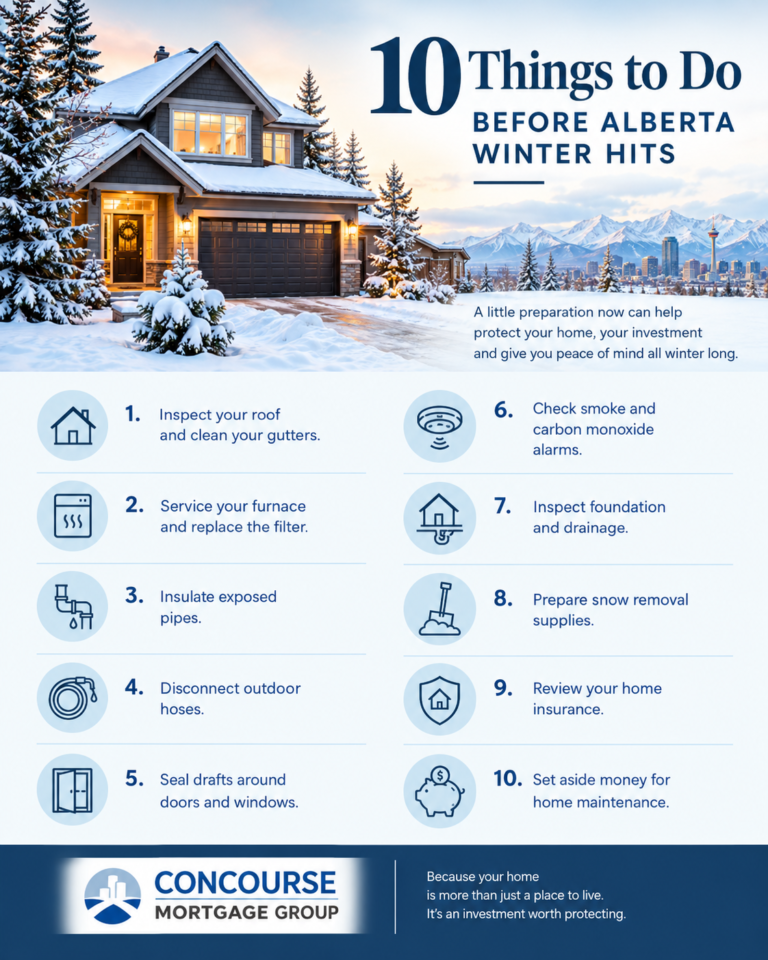
10. Your Alberta Winter Home Checklist
Want to make things easy? Here is a quick checklist to help you prepare your home before the temperatures really drop.
- Inspect your roof and clean your gutters.
- Check your furnace and replace the filter.
- Insulate exposed pipes.
- Disconnect outdoor hoses.
- Seal drafts around doors and windows.
- Check smoke and carbon monoxide alarms.
- Inspect your foundation and drainage.
- Prepare snow removal supplies.
- Review your home insurance policy.
- Set aside money for winter maintenance and repairs.

Protecting Your Home Is Protecting Your Investment
Your home is more than just a place to live. For many Albertans, it is one of the largest investments they will ever make.
Taking a little time to prepare for winter can help prevent avoidable repairs, improve comfort, and keep your home in good condition for years to come.
Whether you are getting ready for your first winter as a homeowner or have been living in your property for decades, a little preparation now can make a big difference when the snow starts falling.
And if you are thinking about buying a home, refinancing, or reviewing your mortgage as part of your overall financial plan, the team at Concourse Mortgage Group is here to help.
We work with homeowners throughout Calgary and Southern Alberta to help them navigate their mortgage options and make informed decisions about their homes.
Have questions about your mortgage or planning your next move? Contact Concourse Mortgage Group to connect with our team.
Visit Concourse Mortgage Group
Frequently Asked Questions
When should I start preparing my Alberta home for winter?
Ideally, begin preparing in early fall before temperatures drop significantly. This gives you time to complete maintenance, inspect your heating system, and address any repairs before freezing weather arrives.
How can I prevent frozen pipes in Alberta?
Insulate exposed pipes, seal drafts, disconnect outdoor hoses, and keep your home heated during cold weather. If you are away for an extended period, arrange for someone to check on your home.
Does home insurance cover winter water damage?
Coverage depends on your specific policy and the circumstances of the damage. Review your policy with your insurance provider to understand what is covered, what exclusions apply, and whether additional coverage may be appropriate.
What home maintenance should I prioritize before winter?
Start with your roof, gutters, furnace, exposed plumbing, exterior doors and windows, and drainage. These areas can help prevent common winter issues and costly repairs.
Can winter home maintenance help protect my property value?
Regular maintenance can help keep your property in good condition, reduce the risk of preventable damage, and support its long-term value. It also helps you identify issues before they become more expensive to repair.
What should I budget for winter home maintenance?
There is no one-size-fits-all amount. Your budget will depend on your home’s age, condition, size, and maintenance needs. Setting aside money regularly can help you prepare for seasonal costs and unexpected repairs.